





Introduction: Why Prompt Engineering Matters in 2026
As Artificial Intelligence becomes part of everyday work, the quality of AI output depends entirely on the quality of prompts. Prompt Engineering is no longer a “nice-to-have” skill—it is a core digital skill for 2026 and beyond.
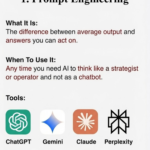
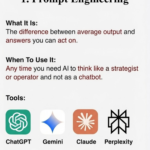
Whether you are using ChatGPT, Gemini, Claude, or other AI tools, prompt engineering decides whether you get average answers or actionable, business-ready results.
What Is Prompt Engineering?
Prompt Engineering is the skill of designing clear, structured, and strategic instructions (prompts) so that AI systems produce accurate, useful, and goal-oriented outputs.
Simple Definition:
Prompt Engineering is the difference between basic AI responses and answers you can actually act on.
It is not about asking random questions. It is about guiding AI to think like a strategist, analyst, or operator instead of a chatbot.
Why Prompt Engineering Is a Critical AI Skill
AI tools are powerful—but they don’t think on their own. They respond based on:
- Context you provide
- Role you assign
- Constraints you define
- Output format you demand
Without proper prompting:
- AI gives generic answers
- Business insights are weak
- Automation fails
With good prompt engineering:
- AI behaves like a consultant
- Outputs become reusable
- Decision-making improves
When Should You Use Prompt Engineering?
You should use prompt engineering any time you want AI to perform serious work, such as:
- Business strategy creation
- Marketing campaigns
- Resume or job preparation
- Software planning
- Data analysis explanations
- Teaching or training content
In short: Whenever AI must think, not just reply.
Core Elements of a Powerful Prompt
A high-quality prompt usually includes:
1. Role Assignment
Tell AI who it should act as.
“Act as a senior product manager…”
2. Clear Objective
Explain what outcome you want.
“Create a launch strategy…”
3. Context
Provide background information.
“Target audience is fresh graduates…”
4. Constraints
Define limits.
“Keep it under 500 words…”
5. Output Format
Specify structure.
“Give output in bullet points.”
Prompt Engineering Example (Simple vs Advanced)
❌ Weak Prompt:
“Explain AI”
✅ Strong Prompt:
“Act as an AI trainer. Explain Artificial Intelligence to beginners using real-life examples, simple language, and no technical jargon. Limit the answer to 300 words.”
The second prompt produces clear, teachable, usable content.
Prompt Engineering for ChatGPT and Other AI Tools
Prompt engineering works across all major AI platforms:
- ChatGPT
- Gemini
- Claude
- Perplexity
The logic remains the same, only the tuning changes slightly.
Common Prompt Engineering Mistakes
Avoid these mistakes:
- Writing vague prompts
- Giving no context
- Expecting AI to guess your intent
- Asking multiple tasks in one line
- Not defining output format
These mistakes lead to average AI output, even from powerful models.
Prompt Engineering vs Traditional Skills
| Traditional Skill | Prompt Engineering |
|---|---|
| Manual effort | AI-assisted execution |
| Slower results | Faster iteration |
| Limited scale | Unlimited scalability |
| Tool-specific | Tool-agnostic |
Who Should Learn Prompt Engineering?
Prompt engineering is useful for:
- Students
- Developers
- Marketers
- Business owners
- Educators
- Job seekers
- Non-technical professionals
No coding background is required.
Prompt Engineering as a Career Skill
In 2026, companies won’t just hire people who “know AI tools”.
They will hire people who know how to extract value from AI.
Prompt Engineering enables:
- Better productivity
- Smarter automation
- Faster decision-making
- Stronger AI workflows
Future of Prompt Engineering
As AI evolves:
- Prompts will become more structured
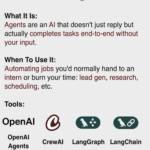
- AI agents will rely on prompt logic
- Prompt engineering will blend with automation
Those who learn it early will stay ahead of the curve.
Conclusion
Prompt Engineering is the foundation skill of the AI era.
It transforms AI from a chatbot into a thinking assistant, strategist, and operator.
If you want to stay relevant in 2026 and beyond, mastering prompt engineering is not optional—it is essential.